
How it started You might know Pavlis, or Pavel Vacek, thanks to Forbes and his collaborations with various influencers, primarily as the co-owner of the company that owns the GG Booster (a healthier alternative to energy drinks) and Swaglift (sports supplements) brands. However, I know him from the time when he himself was dedicated to filmmaking. He came to one of my very first workshops called „Letem filmovým světem“ (Flying through the film world) at the Fotoškoda store near Wenceslas Square in Prague, where I taught him how to use the equipment. Over the years, the enthusiastic beginner became a successful entrepreneur and co-owner of companies for which I later helped realize two studios and a large number of shooting sets – from selecting cameras, lenses, and lights to designing lighting and sound, and training employees.
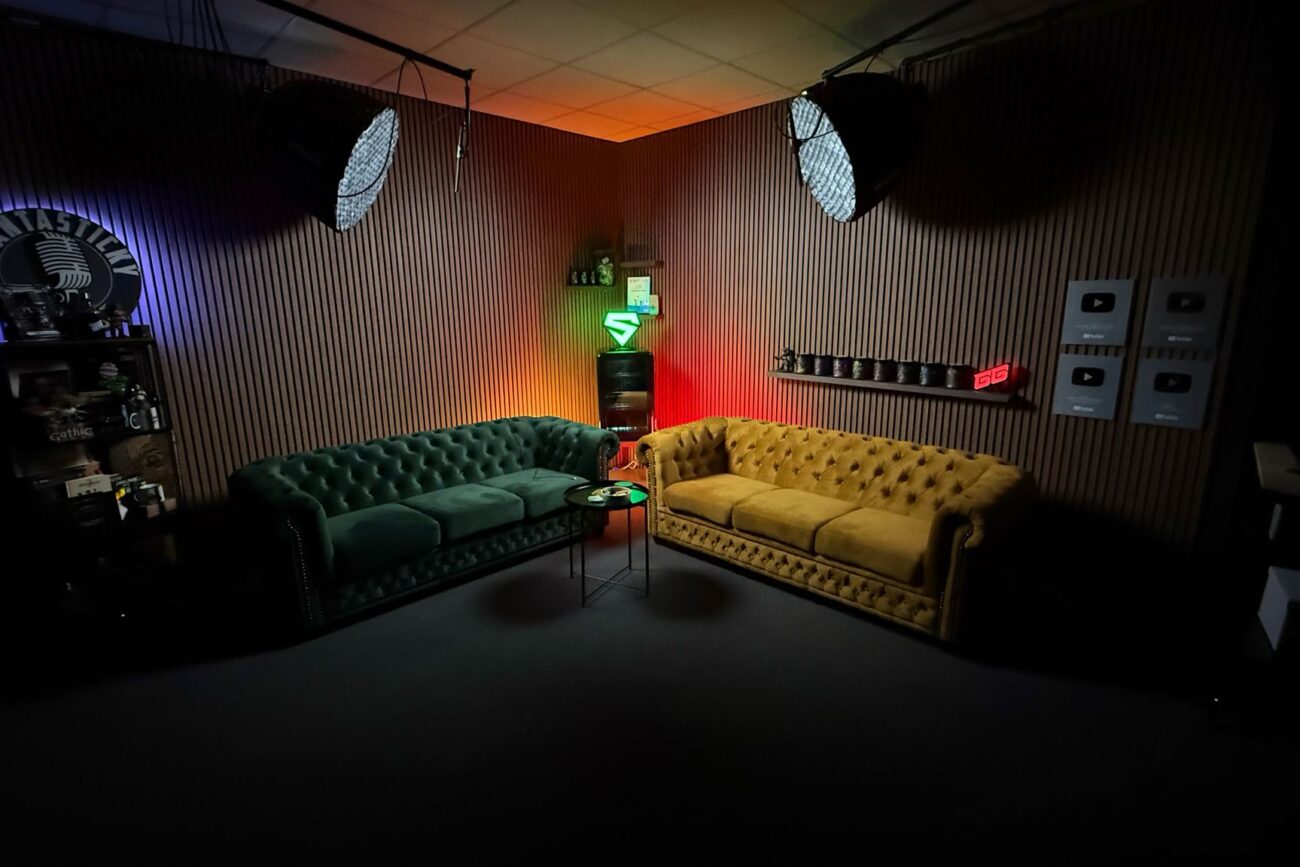
But I will dedicate a separate article to that. Here I want to show our second level of collaboration, which is the filming itself.
Fan film for Kingdom Come: Deliverance II For every major new game release, GG Booster launches a special edition and shoots short films for it. Because our production company has been collaborating directly with Warhorse Studios for a long time, from the feature-length documentary about fencing Fechtbuch: The Real Swordfighting behind Kingdom Come to the Live Action Series featuring the game’s main actors, they approached us for a fan film to be created in cooperation with Warhorse.
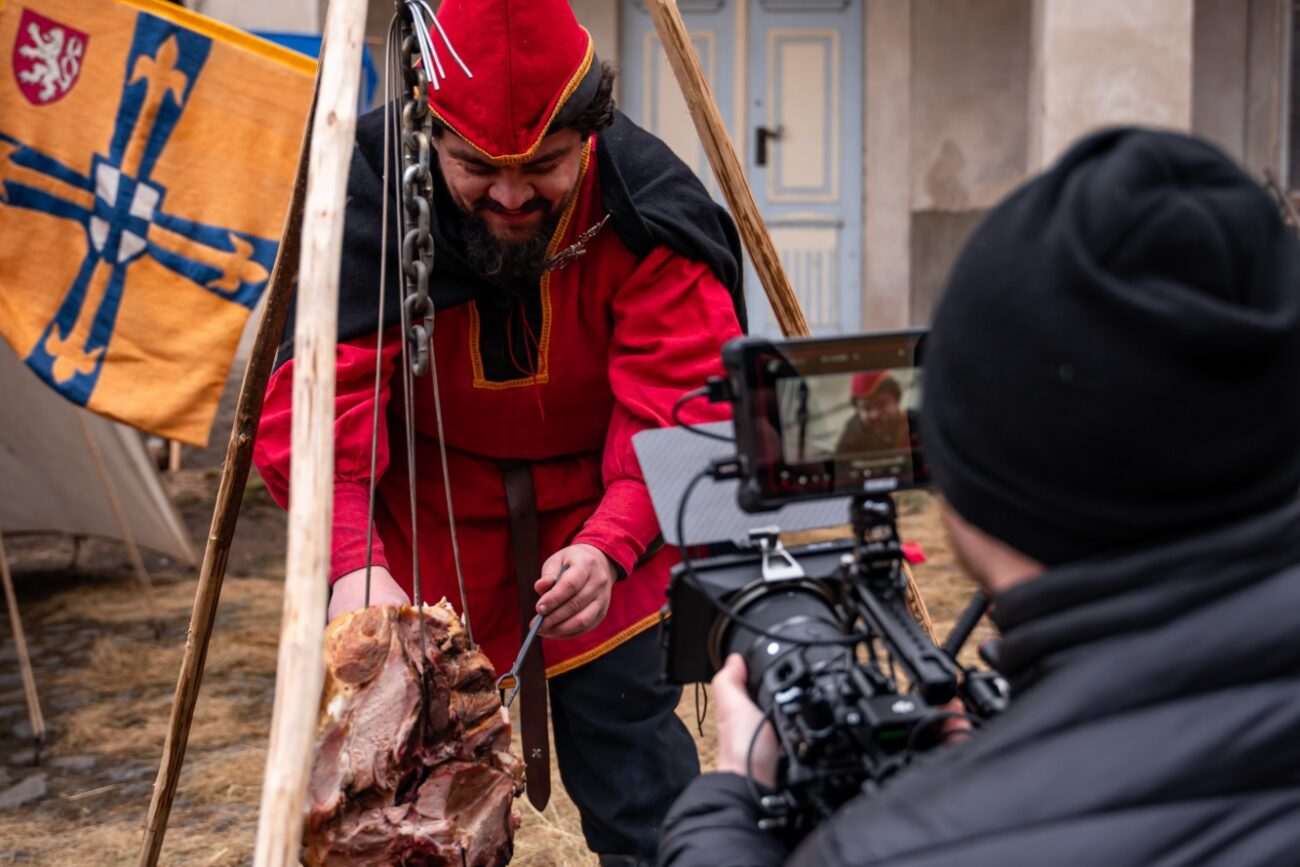
Daniel Vávra, the game designer and then the main face of the studio, also appeared in it.
We filmed at the end of January in real winter conditions at the Česká Kamenice castle. We had two days for the short film, during which we also built a medieval tavern and filmed an interview where EvilBender47 and Pavlis asked Daniel Vávra about the game, and then edited the whole thing into a table-podcast format. We kept going for almost two days straight with barely any sleep. On the third day, we filmed a knight ambush in the forest. I was the only one on set representing our production. I brought the lighting equipment, fog machine, external monitor, wireless systems, and DPA microphones. An external sound engineer took care of the audio. I was 100 percent in charge of the visuals. Pavlis wrote the script and we co-directed: he knew what he wanted to tell, and I suggested where and how to shoot it.
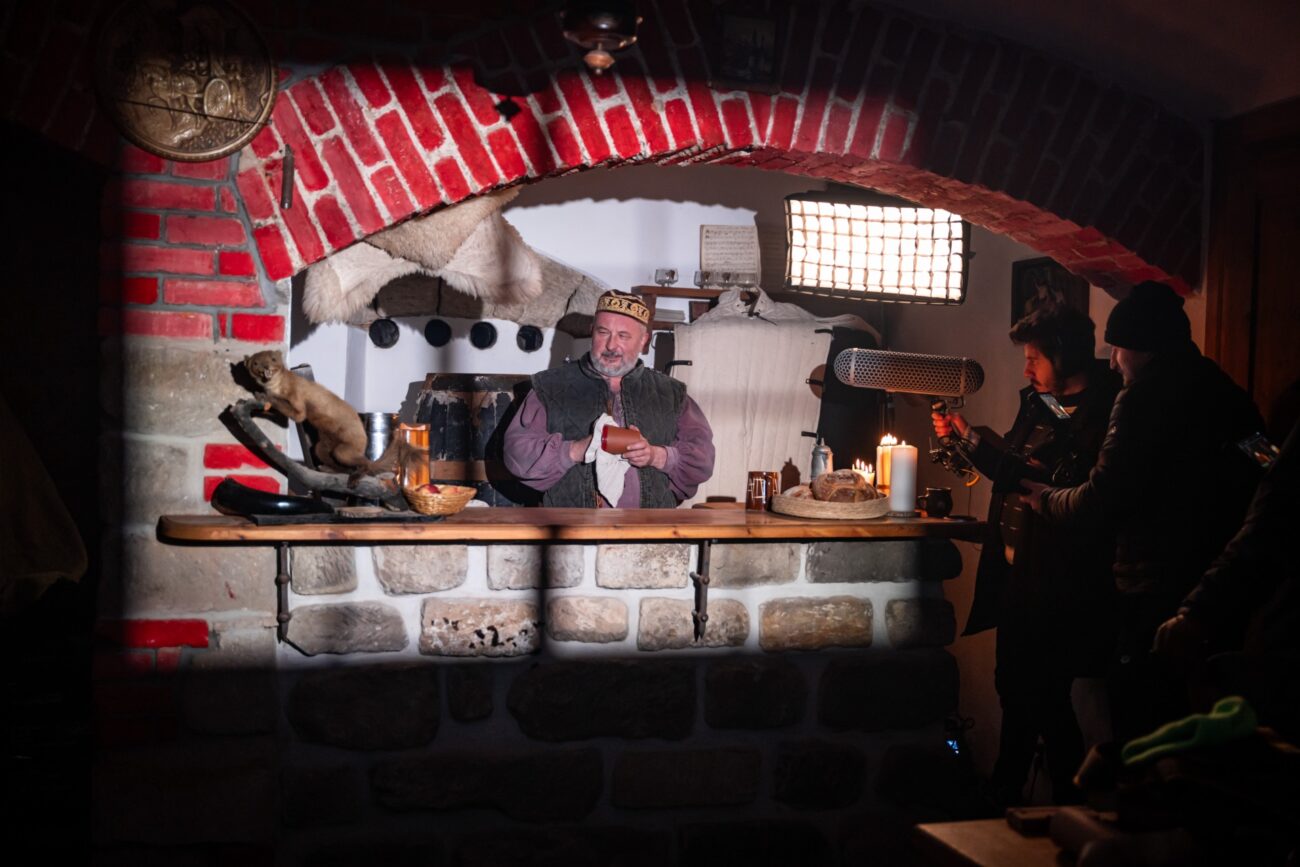
What was the hardest part In the castle’s exteriors, we had to cover up everything modern, from the lightning rod and windows to the road, which we covered in hay. A lot of great people helped out—they set up tents, cooked, and brought in a blacksmith, creating a small, lively medieval square right by the castle.
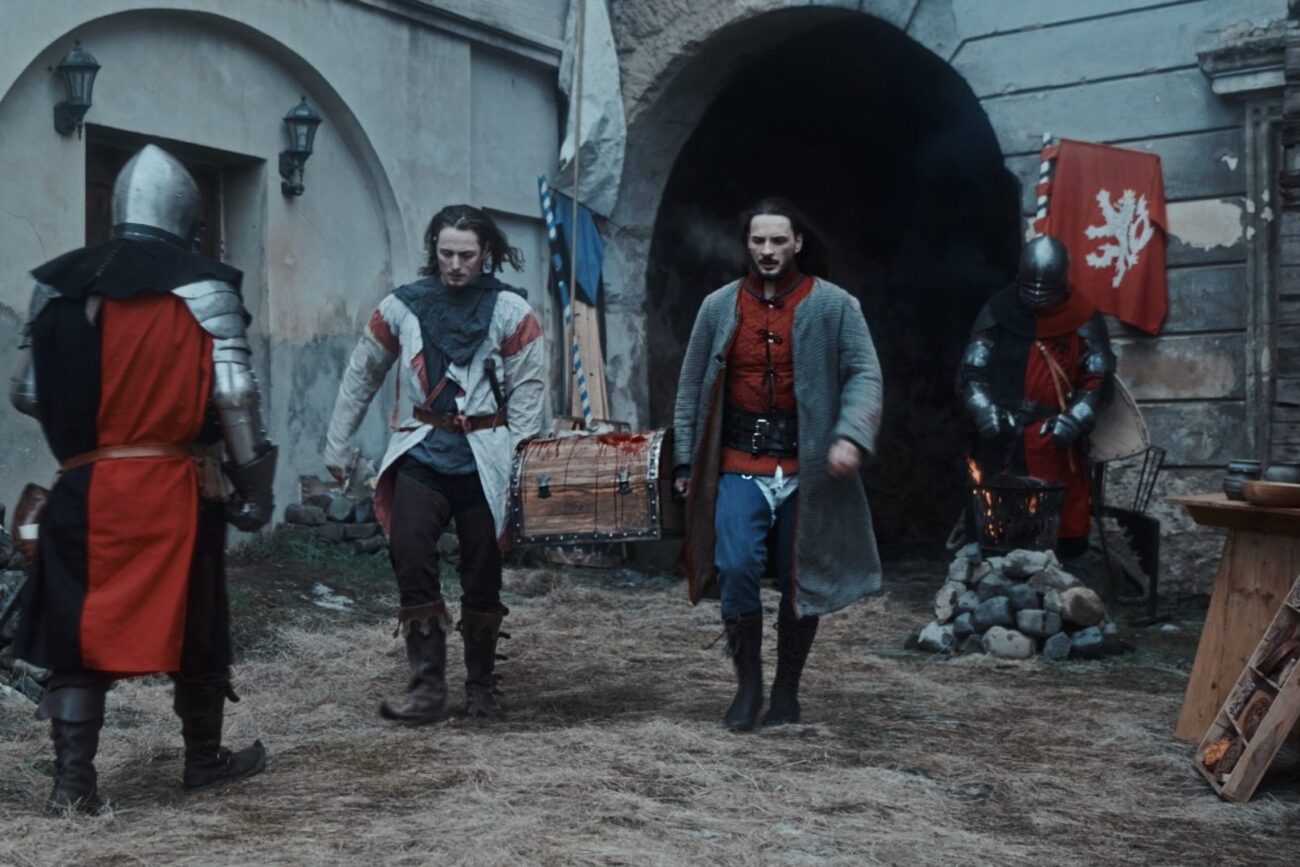
The most demanding part was lighting the interiors. They were miniature, with low ceilings and vaults, so there was nowhere to attach expansion poles, yet we needed to shoot in all directions. There was no time for retakes, so many of the manually focused shots had to come out perfectly on the first try. To maintain dynamics, we shot everything handheld.
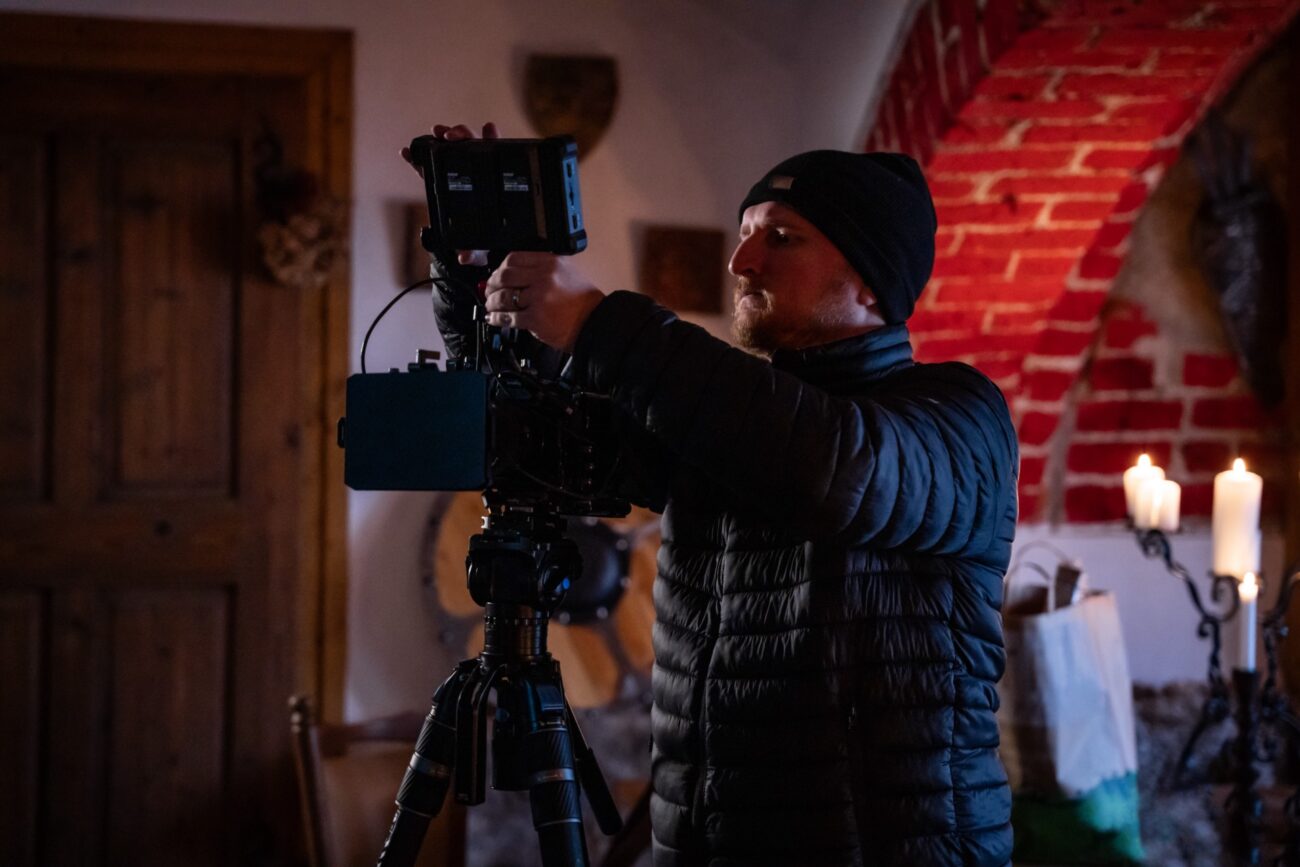
Improvisation on set Many shots were created creatively right on the spot. We set up a prison in the cellar: a few steel pipes in the foreground created the illusion of bars, and a small LED light in the corner simulated moonlight. Similarly, we used modern lights to imitate a flickering fireplace. We also used classic practical effects. An actor shoots a dart into a spot where, for safety reasons, no one is standing; the camera pans in that direction and cuts to a shot where the second actor is already holding the dart in his body. Because everything was shot on a long focal length, it looks like one continuous hit.
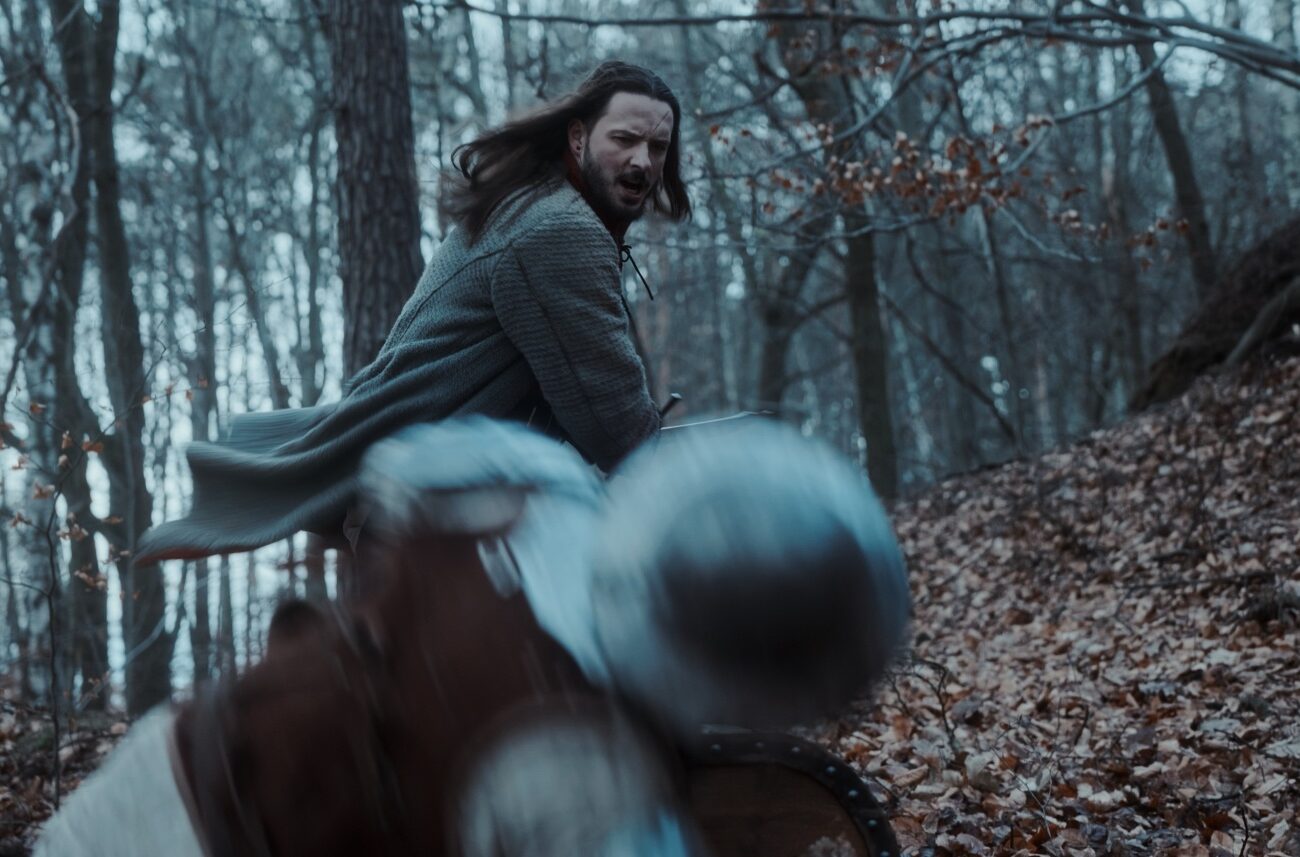
We filmed the fight scene in about eight takes to have variations of all the parts so nothing was missing. Daniel Vávra wasn’t allowed on a horse at that time. He had interviews and marketing awaiting him for the game’s release, and a potential fall could complicate the launch. A stuntman rode the horse for his arrival, and we shot it in a way that wouldn’t be noticeable. To capture the feel of the game, I attached a drone and a DJI Osmo Action 4 action camera directly onto the actor, who was also the stuntman and swordsman. The bard was played by influencer RobDiesALot.
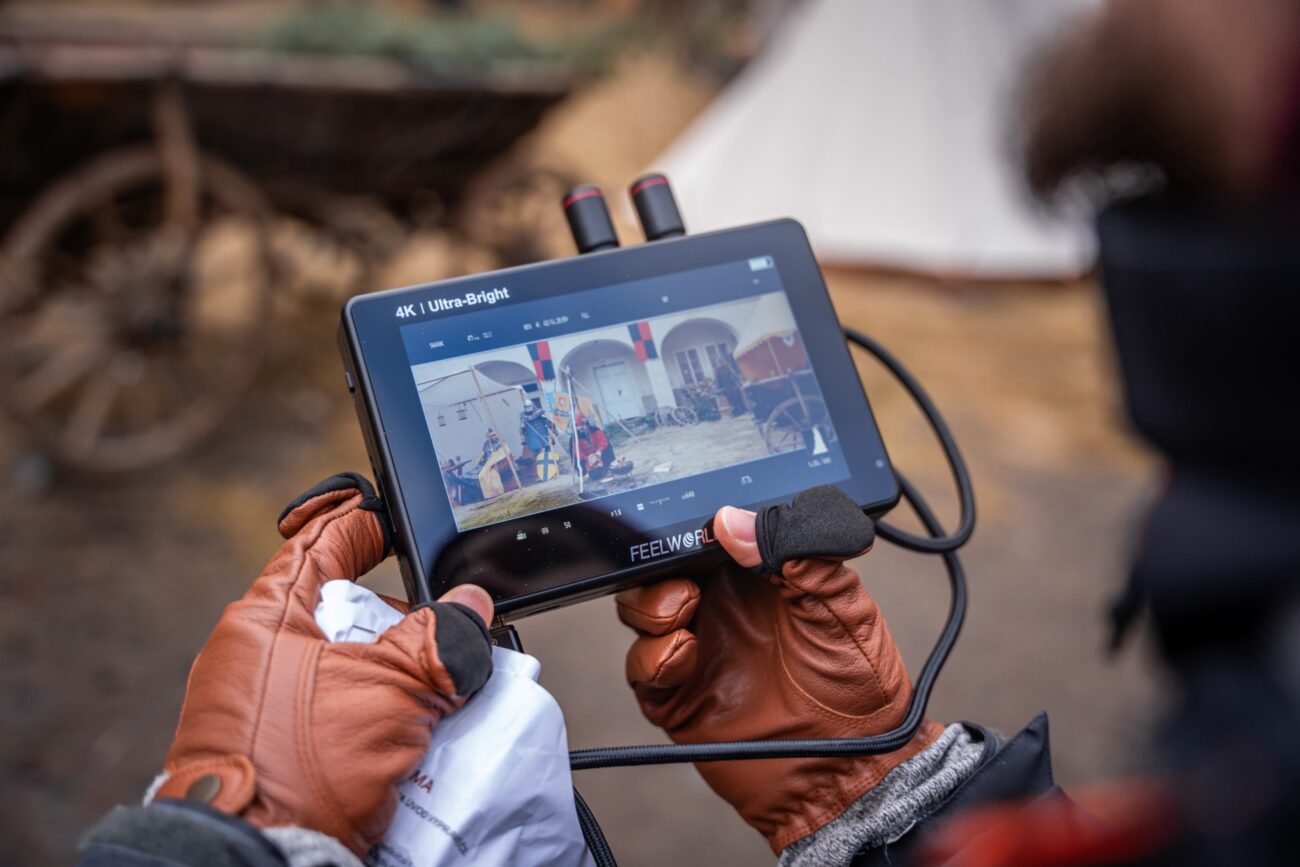
Post-production After filming wrapped, I helped with color grading and audio post-production: removing echo, balancing volume, and cleaning up distracting frequencies. We lowered the pitch of one character’s voice by a few semitones to make him sound darker. After a rough cut by EvilBender47, I did the final edit and selected music from Artlist. The film was received very positively.
Battlefield 6 in real life For the release of the special edition of Battlefield, we shot a video with a real tank, army vehicles, and jeeps.
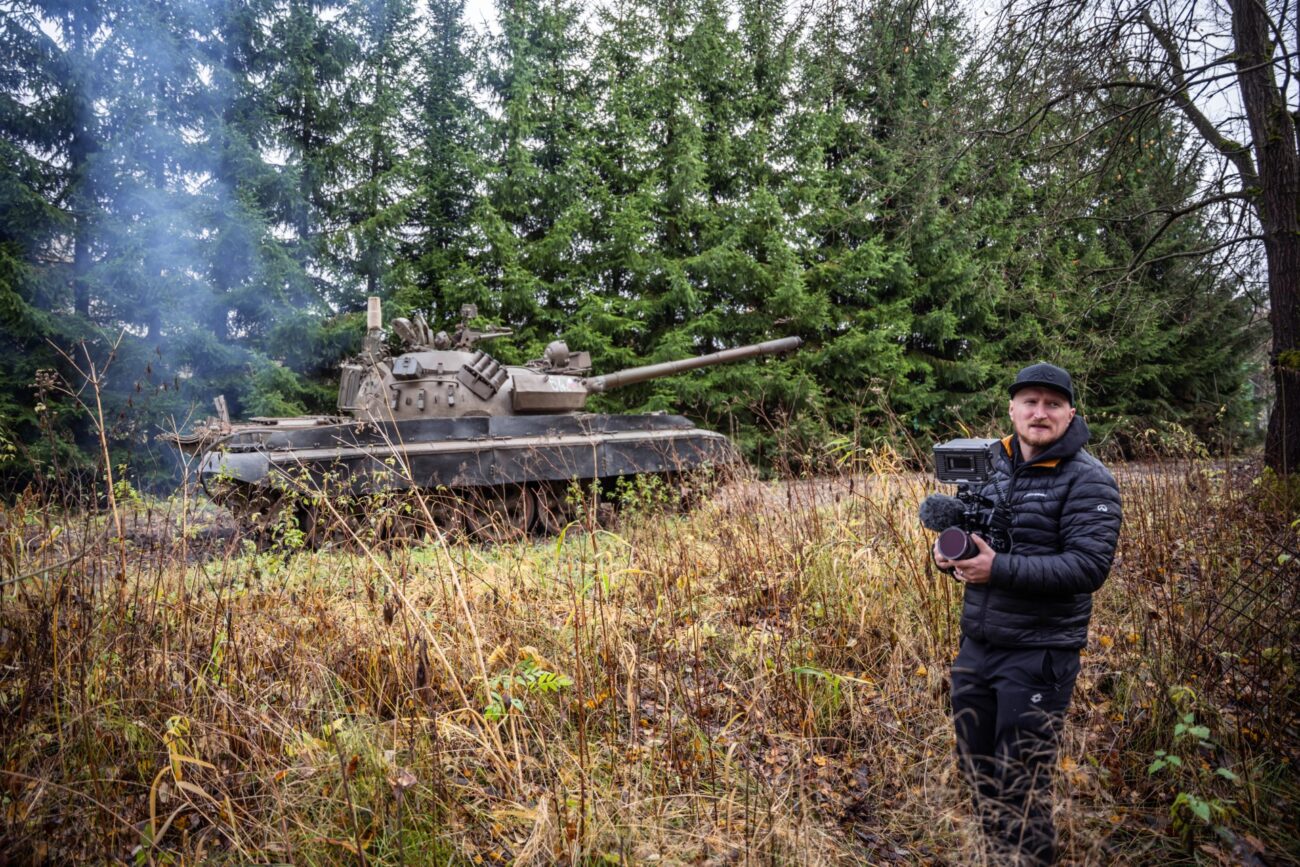
We had from around noon until night to shoot. Influencers Vidrail, Peťan Games, and EvilBender47 participated, and the video was released on the latter’s channel.
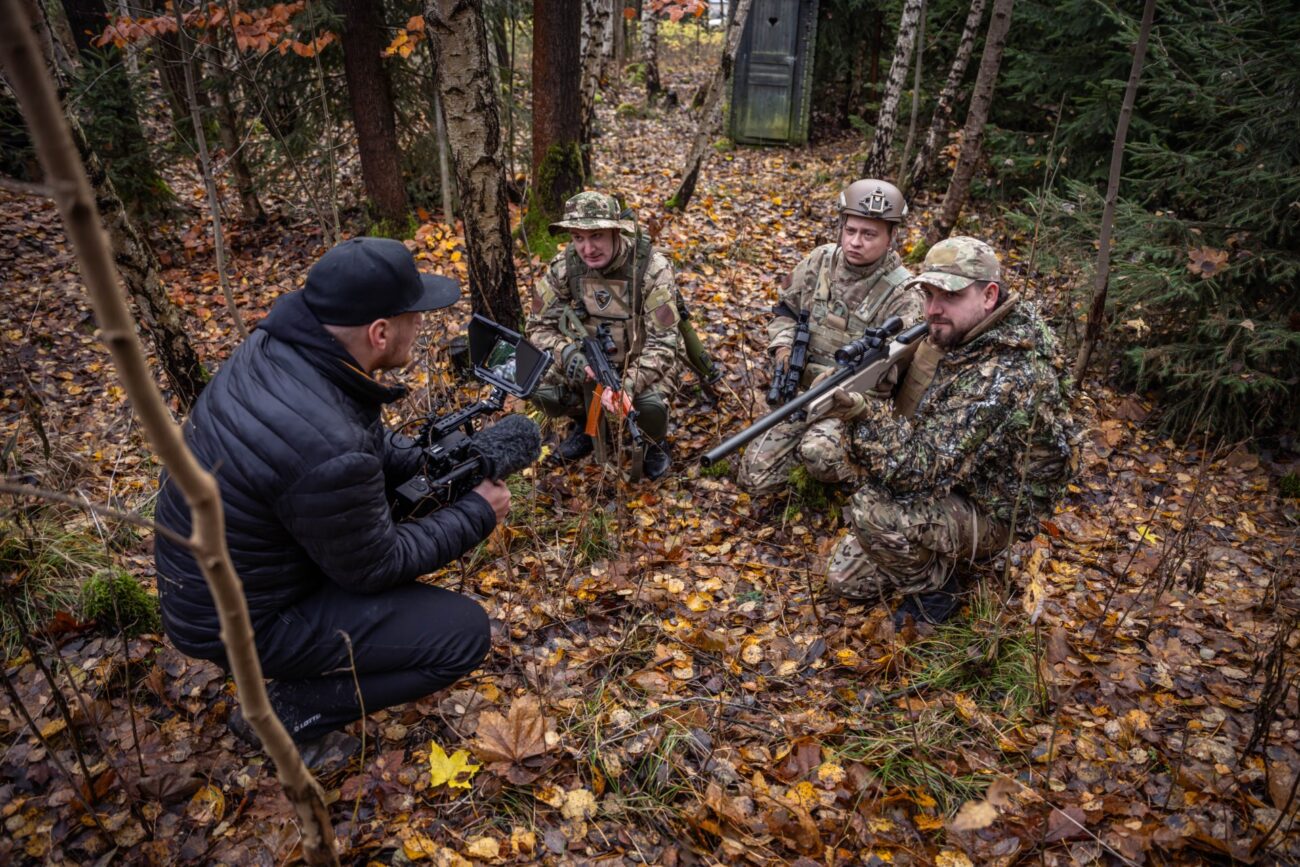
The video was finished within a week, including visual effects. For the first time in this type of production, we used artificial intelligence—not for generating images, but simply as an assistant for effects. For the sake of speed, I shot everything handheld and we didn’t use wireless microphones. We recorded the sound using a professional DPA 2017 directional microphone directly on the camera, which allowed the shoot to move really fast. The mud and the tank itself were a challenge: operating it costs a lot of money, not just the rental, but also the diesel. The actors had to hold onto it while it was moving, surrounded by airsoft equipment, smoke grenades, and drones. Most of the shots had to be nailed on the first take.
Swaglift Day: promo the next morning Most recently, we filmed Swaglift Day for the guys at the Liberec arena, attended by six to seven thousand spectators. I arrived as a solo cameraman with the intention of handing over the footage for a larger documentary that they would edit themselves.
However, the next day, after returning home, I additionally sent them a finished four-and-a-half-minute video. It captured the atmosphere of the day but intentionally didn’t show everything, like the most extreme performances. It was a teaser ahead of their documentary. I edited it in a few hours, including full post-production and an English voiceover that I wrote and narrated. It went so fast because I already knew how I was going to edit it while I was shooting. For events like this, the sooner the video comes out, the better.
Ten years and still together We have been collaborating with the brand for over ten years, and so far, they’ve never been dissatisfied. They also supported our feature documentary Krkonoše: Cesty Vlachů, both financially and by appearing in it, thereby helping its future reach.