The call I almost rejected I have been working in the market as an instructor for over thirteen years. I teach individuals who want to become filmmakers, and I train companies that want to produce and distribute their own content. One of my former students couldn’t make it to a shoot, so he recommended me to producer and director Honza Zavazal. Honza is a horseback polo commentator and teaches the sport all over the world. He is an extremely interesting personality. He called me to ask if I would operate the B-camera at the Karlova Koruna castle, where a par force hunting event was taking place. I quickly declined because I don’t offer B-camera services for one-off shoots, and promised to try to recommend someone else. At the same time, I listened to what he had on his mind, and it caught my interest.
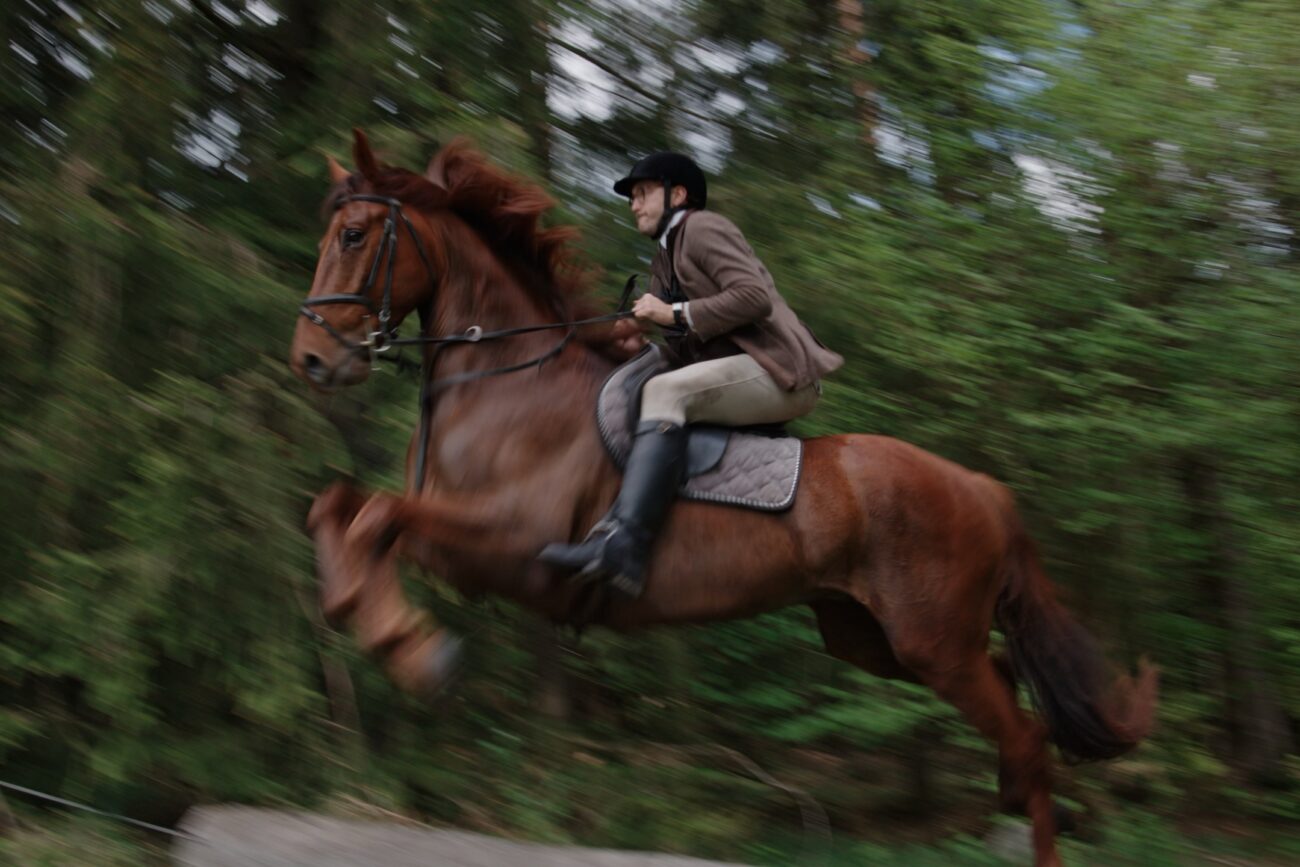
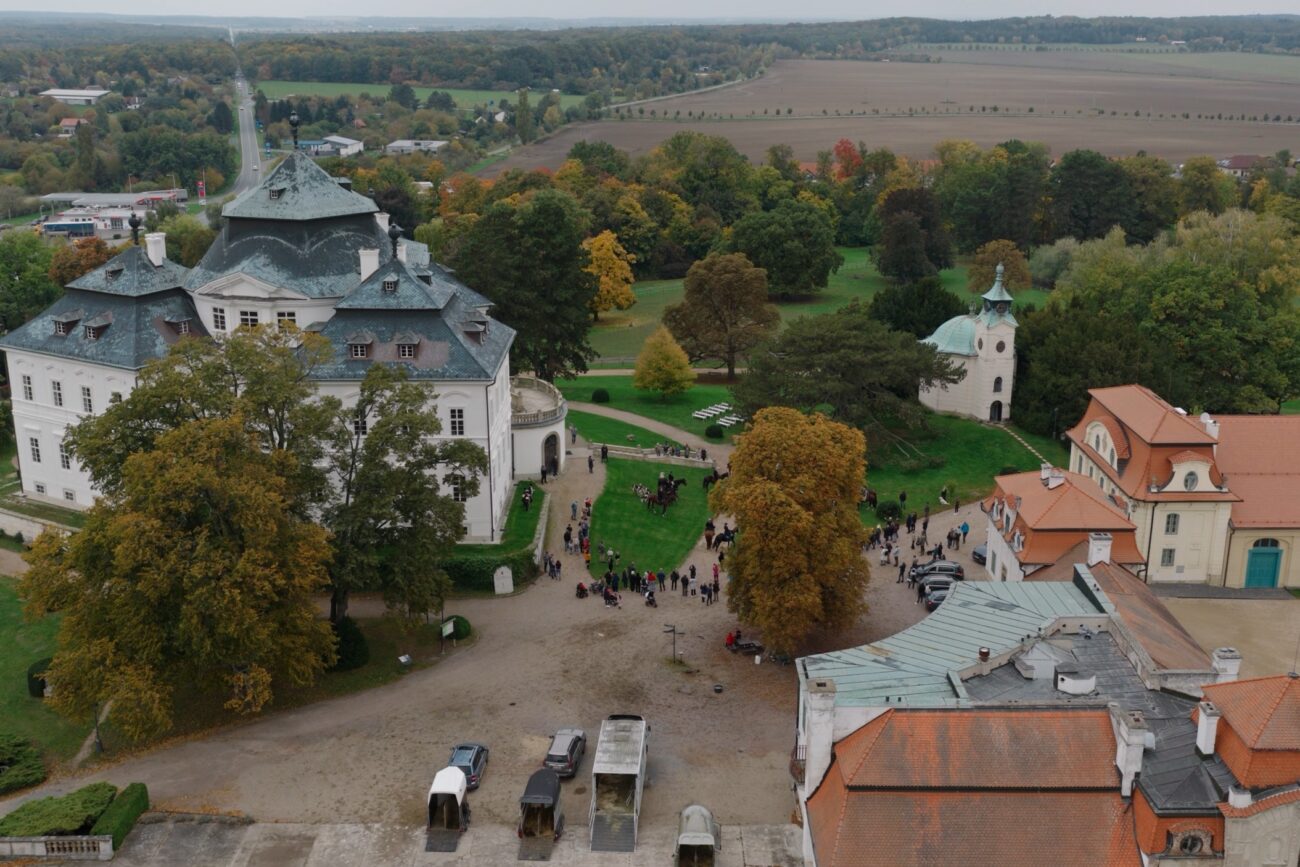
Par force hunts are part of the history of the Czech Republic, and we can be proud of them. From this aristocratic sport originated the Velká pardubická steeplechase, which is watched live by over three million viewers on Czech Television. Memories of my childhood in the village immediately came back to me. As a boy, I watched the autumn Hubert rides with amazement, or played the „hunt for the ‚baba'“ with my friends—a legendary deer that riders only chased for show, so it could then safely and calmly return to its enclosure. There was a special nobility and respect for the animal in it. I started thinking about what an experience it would be to film horses in the landscape, dogs, and riders in costumes in the autumn leaves, since the hunt was taking place on October 11th.
Furthermore, our production has been dedicating itself to history for a long time. At that time, we already had the first year of our authorial feature documentary Krkonoše: Cesty Vlachů behind us, dozens of short documentaries with eyewitnesses, and a fencing documentary for Warhorse Studios Fechtbuch: The Real Swordfighting behind Kingdom Come. I called Honza back to say I would take it, but that I could offer him more than just a B-camera. For example, a drone with three lenses, with which I can film horses from a distance, dynamically and without endangering anyone.
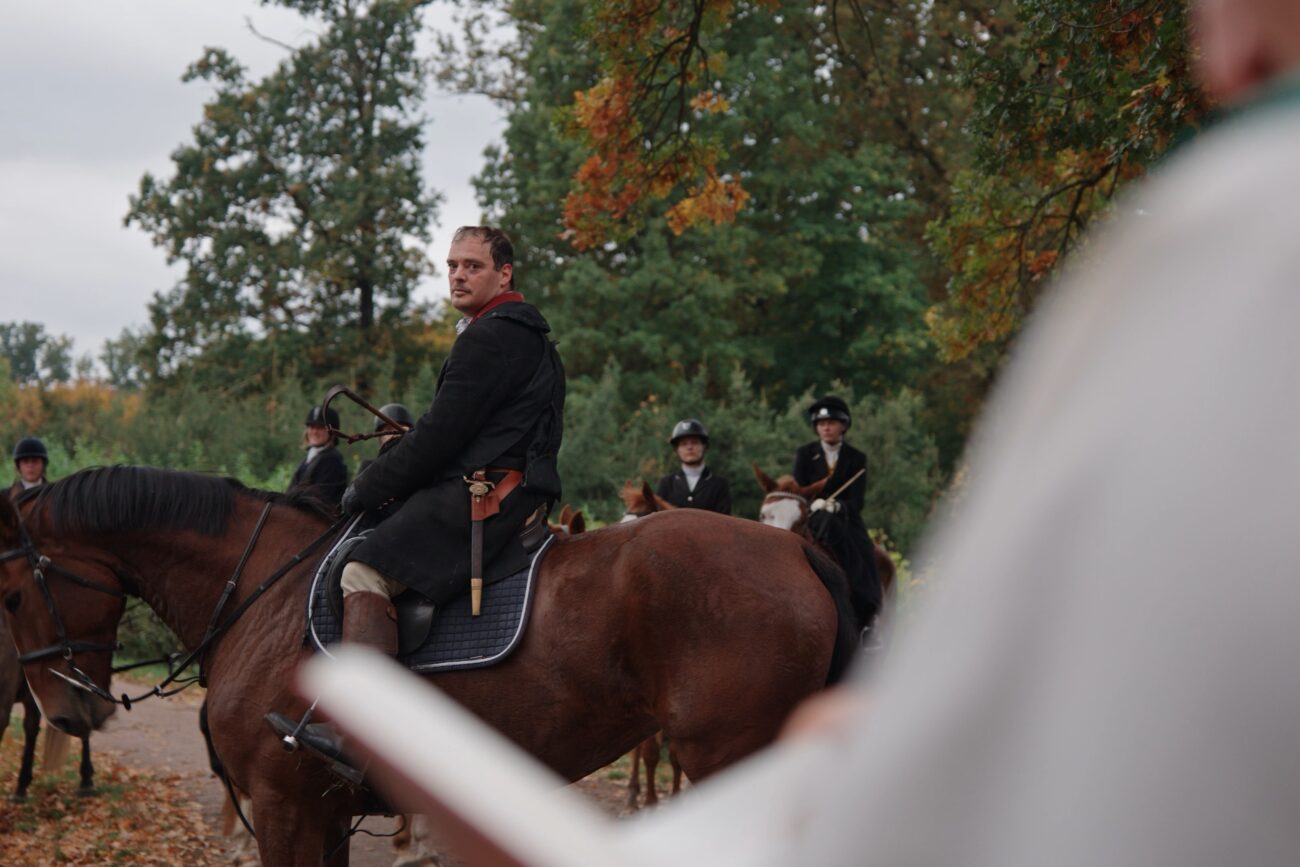
An Italian Café in Prague We met in Prague, and Honza started telling me everything happening in the background. I quickly realized that he is an enthusiast who can transfer his enthusiasm to others. It thrilled me so much that I told him I didn’t understand why this should just be a short film ending up on YouTube with a few thousand views. It’s a strong theme, historically interesting, and at the same time great for an audiovisual experience: the view from the saddle, riding through the landscape, castles. All of this interests people all over the world. I suggested a feature film. I showed him a teaser from Krkonoše and explained our approach. My wife Denisa, who is the director or co-director of our documentaries, always dives deep into the subject. She goes to archives, studies, reads piles of books, and literally becomes an expert. She is a graduate journalist, and documentary filmmaking fulfills her, so she can quickly put together a meaningful axis that entertains the viewer and at the same time has a deeper meaning. I then try to make a cinematic blockbuster out of it. Something that doesn’t just entertain „seniors watching the evening program,“ but also young people, essentially a mainstream documentary. I started my career as a director of photography with a penchant for artistic visuals, and I treat every shot like a painter treats their canvas. This is how we complement each other. I immediately outlined the distribution possibilities for Honza—in cinemas, on television, and sales to VOD platforms—and gave him a sober estimate of potential revenue. He thanked me and said he would think about it.
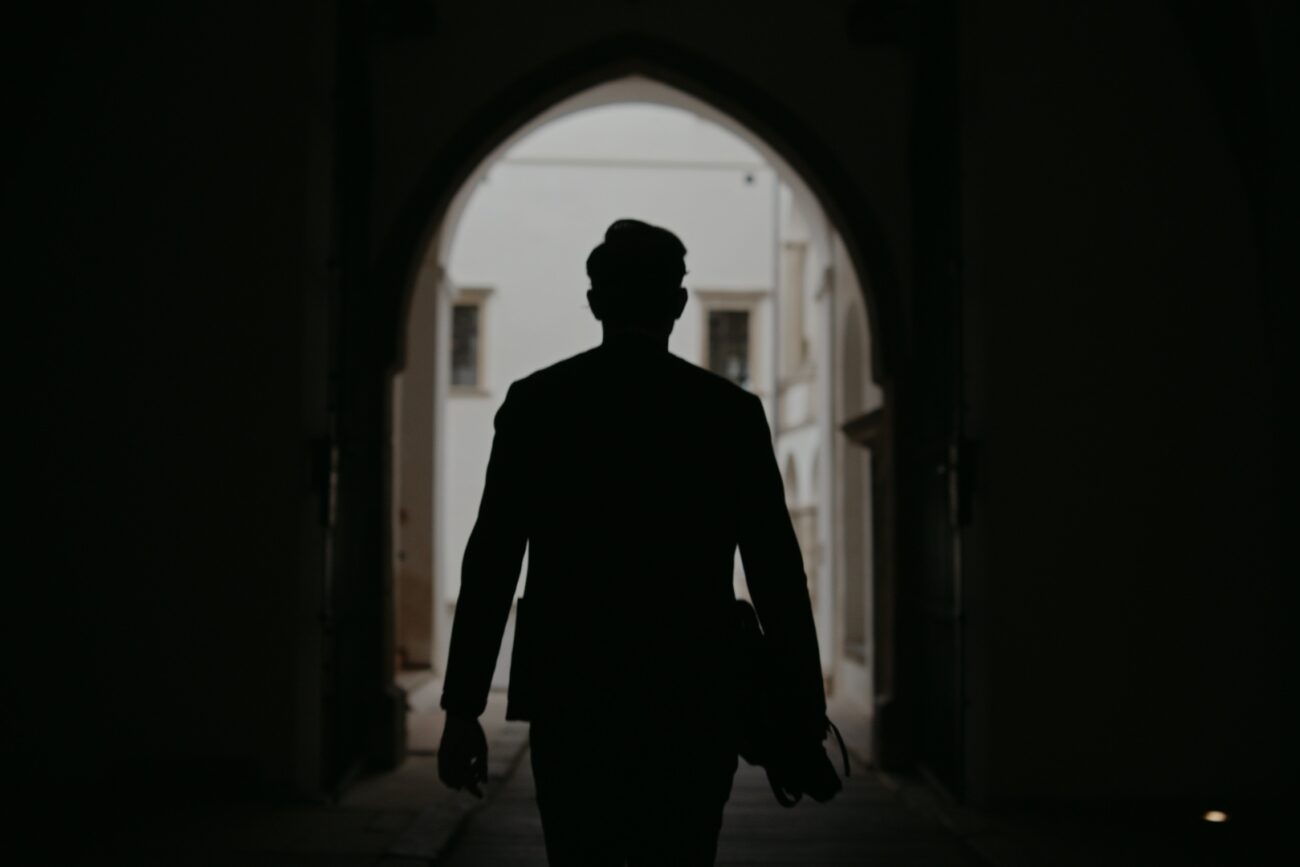
A B-Camera That Shot Like an A-Camera When I later arrived at the hunt as the B-camera, I took it very seriously. I looked where the main camera wasn’t looking, searching for artistic angles and details that would complement the story. I also recorded the sound on professional microphones so that dialogues and monologues could be used. I shot as if I were there alone, so that at least a short story could be edited from the footage. I flew and captured a massive amount of footage with the drone, and when the pack with riders approached me, I picked up the handheld camera. At the end of the day over goulash, I told the main cameraman that I would hate to leave this project, joking that when the producer sees my shots, he will cry with happiness. I don’t just see work as a job, but as a calling.
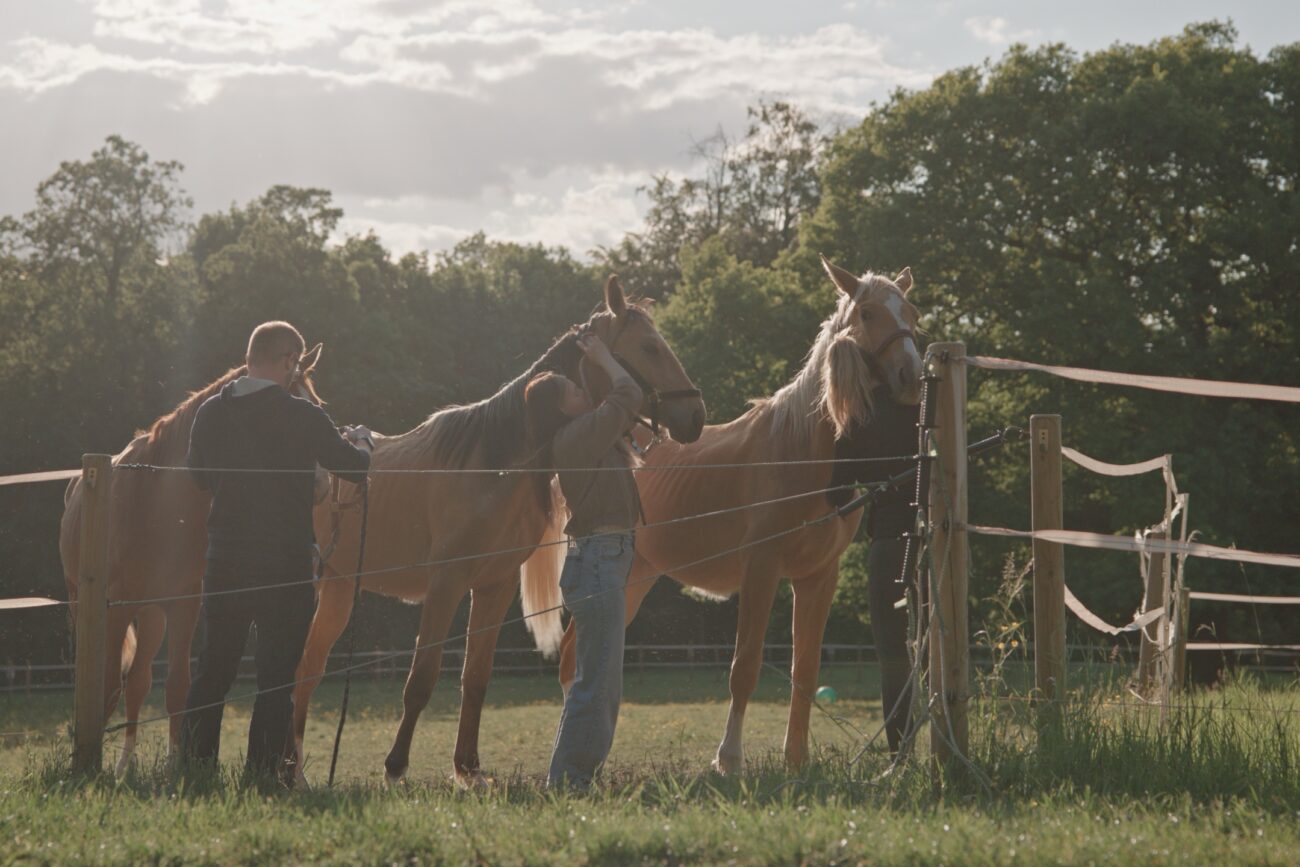
A Turnkey Film After handing over the footage and the invoice, it took a while for Honza to reach out, saying he would like to meet with my wife as well. He came to see us in Trutnov, we discussed all the directions the topic of par force hunting reaches, and agreed to go for it. Honza remained the producer, therefore the director of the project, and the guide of the film. We appreciated that, because he is extremely interesting, has been riding horses for a long time, has no aristocratic roots, and his enthusiasm gave the film something extra. Denisa took over the directing and production, in which they collaborated thanks to Honza’s contacts. I took on the role of the filmmaker. If I called myself just a cameraman, I’d be lying: I also handle sound and partially the direction, meaning the choice of shots and environments.
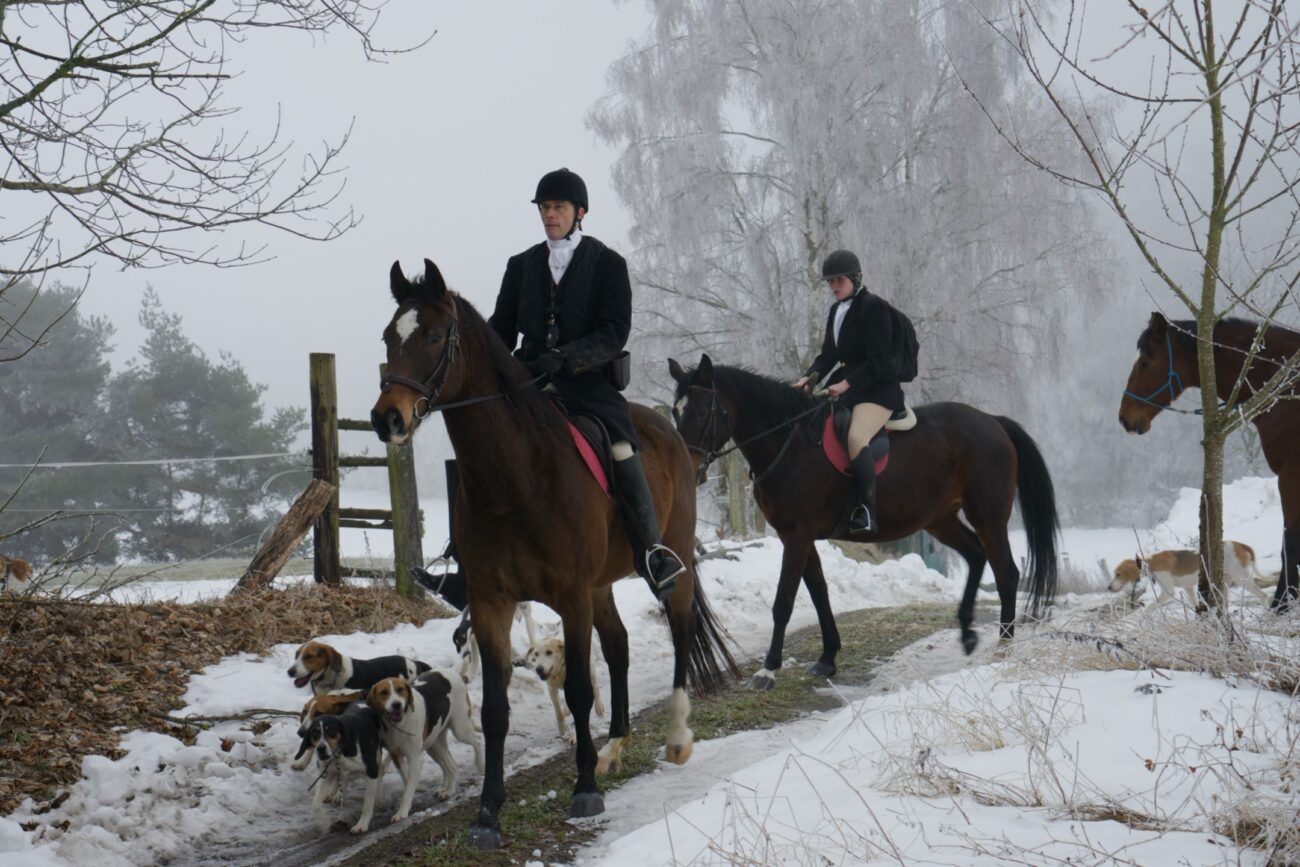
A Year of Filming We filmed the documentary for over a year, with a total of fifteen shooting days. The last day ahead of us is the Velká pardubická. We have shots from hunts in the autumn, in the winter when it was freezing with thick fog, and also from the summer.
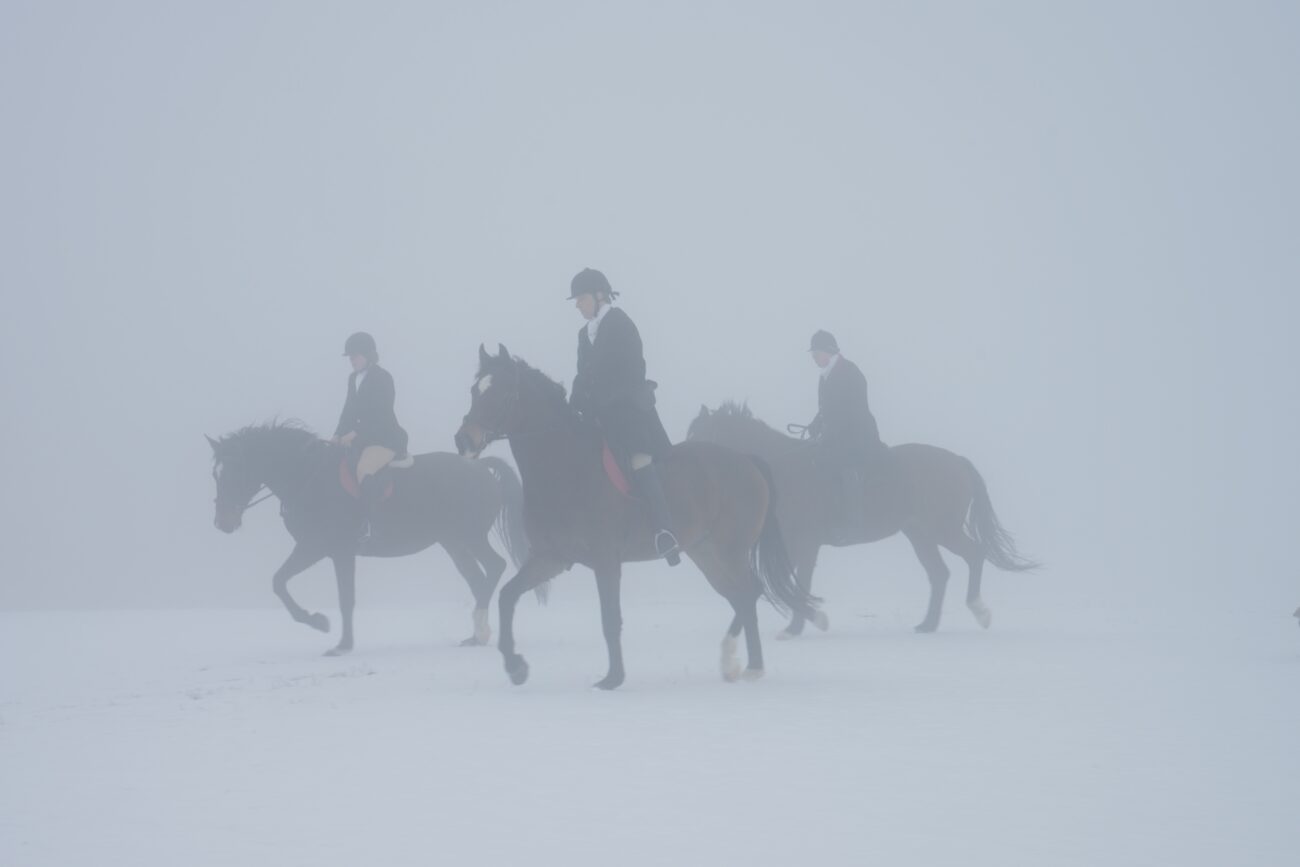
We worked with archival materials, including VHS tapes, visited the archives of several castles, and the film features a large number of respondents, each of whom has something to say about the topic. We spent hundreds of hours in the editing room. The filming was occasionally action-packed. In the winter, I spent a lot of time in the back of an older SUV. It was magical, but extremely cold. I am not afraid to sacrifice equipment for a great shot, so in the freezing cold and fog, I flew the drone until the motors nearly overloaded and started to stall. I barely managed to land. However, it was a flight over an open meadow, so the worst that could have happened was a crash into the frozen ground. A minimalist crew also had another advantage: we could ask more intimate questions. It makes a difference whether you ask about something deep with three people present, or when there are ten standing on set. Thanks to the small crew, a starting producer who had never made a feature film before was able to finance it alongside sponsors. And the filming was „family-like“; we were warmly welcomed everywhere.
Czech and English Versions We produced the film in both Czech and English. In Czech, because it’s about Czech history and we believe it has something to say to the Czech viewer. In English, because the topic is interesting worldwide and, for that reason, easier to sell. In England, for example, there is currently a debate about a complete ban on so-called trail hunting, even though it is, simply put, a very interesting LARP. During our hunts, no animal is abused; both horses and dogs look forward to them, and riding through the landscape is natural for them. Moreover, many jobs are tied to this tradition. Our production company made the film turnkey. If you would like to license it for screening, contact us, and we will gladly connect you with the producer.