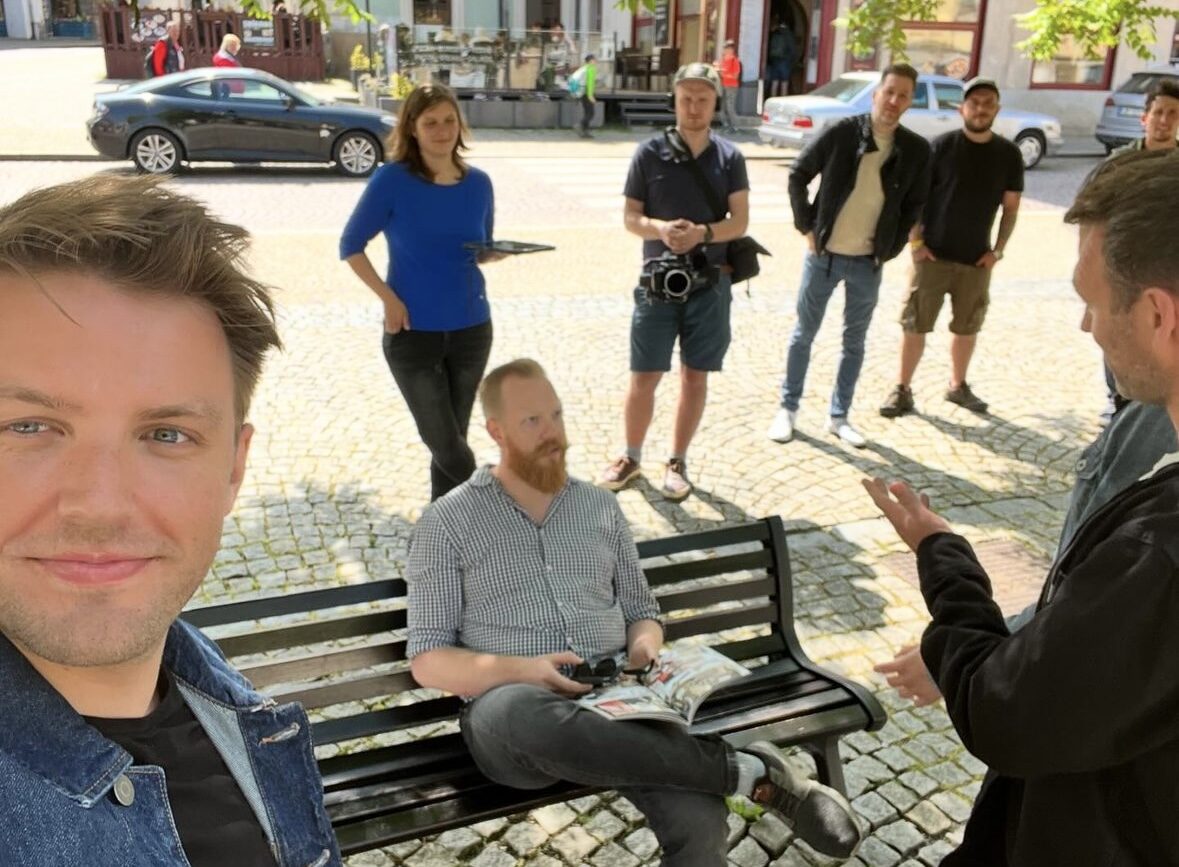
Four people instead of twenty Working on set for the Kingdom Come: Deliverance II Live Action Series were director Vítek Mičke, who was also the screenwriter, myself as the cinematographer, sound recordist (except for the fourth episode), editor, and colorist all in one, my wife Denisa as producer and co-director, and two production assistants.
Our production company knows how to do this, and it partly has to do with where I come from. I grew up in a town of six thousand people. When I decided to become a cinematographer, I had no one to learn from. I went to sets in various roles, such as a runner, camera assistant, author of story concepts and scripts, and making-of creator. Thanks to this, I peeked into many professions and saw how they are done both well and poorly. And I was forced to do them myself, because otherwise, I couldn’t make a living. When you get a job as a cameraman, the client assumes the video will be mixed, edited, possibly with minor animations, and that you will also advise them on how to publish it correctly. Moreover, an unknown person from a small town doesn’t have money for freelancers. My wife and I edited Gravitation ourselves, I did the sound, color grading, and export for the cinema myself, which wasn’t common back then, and it turned out very well.
Equipment has shrunk A lot has changed thanks to technology. Equipment is more accessible, smaller, and one device can replace several. A good example is audio. I used to carry an audio bag with a recorder and separate wireless systems. Each respondent wore a transmitter with a lavalier microphone on a cable. I had to make sure the cable didn’t rub against clothing and break, tune frequencies so the band wasn’t jammed, and monitor the volume: a recording that is too quiet hisses when amplified, one that is too loud peaks and cracks.
That is why sound recordists were common even on smaller sets.
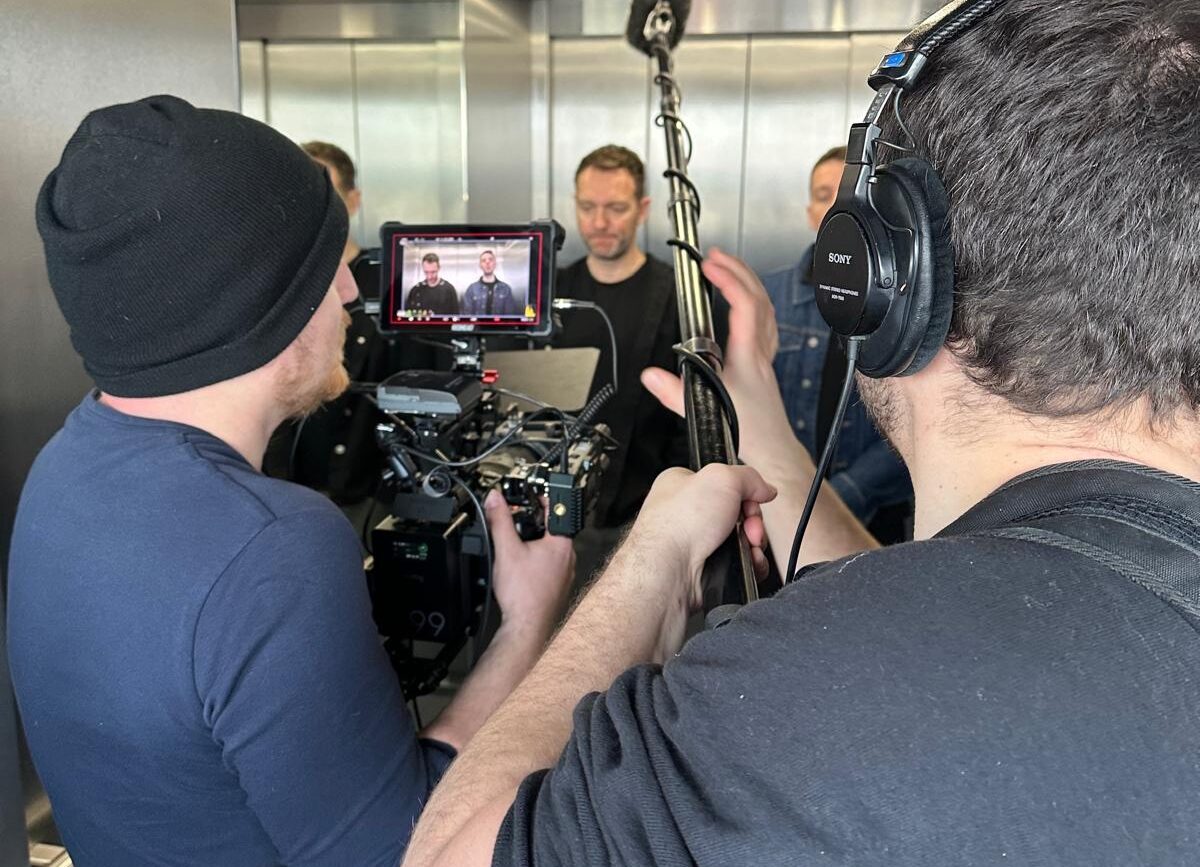
Today, there are wireless devices that contain a transmitter, recorder, and microphone all in one, so you don’t have to worry as much about volume during the shoot. They are miniature, can be magnetically hidden under clothing, and one receiver can handle up to four transmitters, for example. You are several kilograms lighter and much less stressed. Thanks to this, today there are very capable solo creators who can handle multiple professions at once. I don’t mean to deny the purpose of large crews by saying this. I just mean that sometimes a smaller one is more suitable. Where a small crew wins Mobility and inconspicuousness We shot the third episode of the Live Action Series in the Rudolfinum during an actual music recording session. That was the main reason everyone was there, and we were not allowed to disrupt it. With more than ten people, it would have been very complicated. Thanks to the small crew, we could change positions quickly, and communicating among a few people is easier than having to explain everything to everyone individually.
Furthermore, four people in a city look like a small group of tourists. With twenty or thirty people, you already have to deal with the occupation of public space. If you need to shoot in the historical center of a city and occupy multiple streets, this single administrative step can make the project hundreds of thousands to millions of crowns more expensive for every shooting day. Intimacy A respondent will sometimes completely forget about a small crew. There is a difference between talking about your inner feelings while looking at one person with a camera and a small light, versus having thirteen people staring at you, some of whom are waiting for instructions, looking at their phones, or whispering in the background. As an example, I can mention a documentary with my father. The fact that I was alone made it easier for me to interview him about his youth and philosophical thoughts, as well as to get among his friends without causing a fuss.
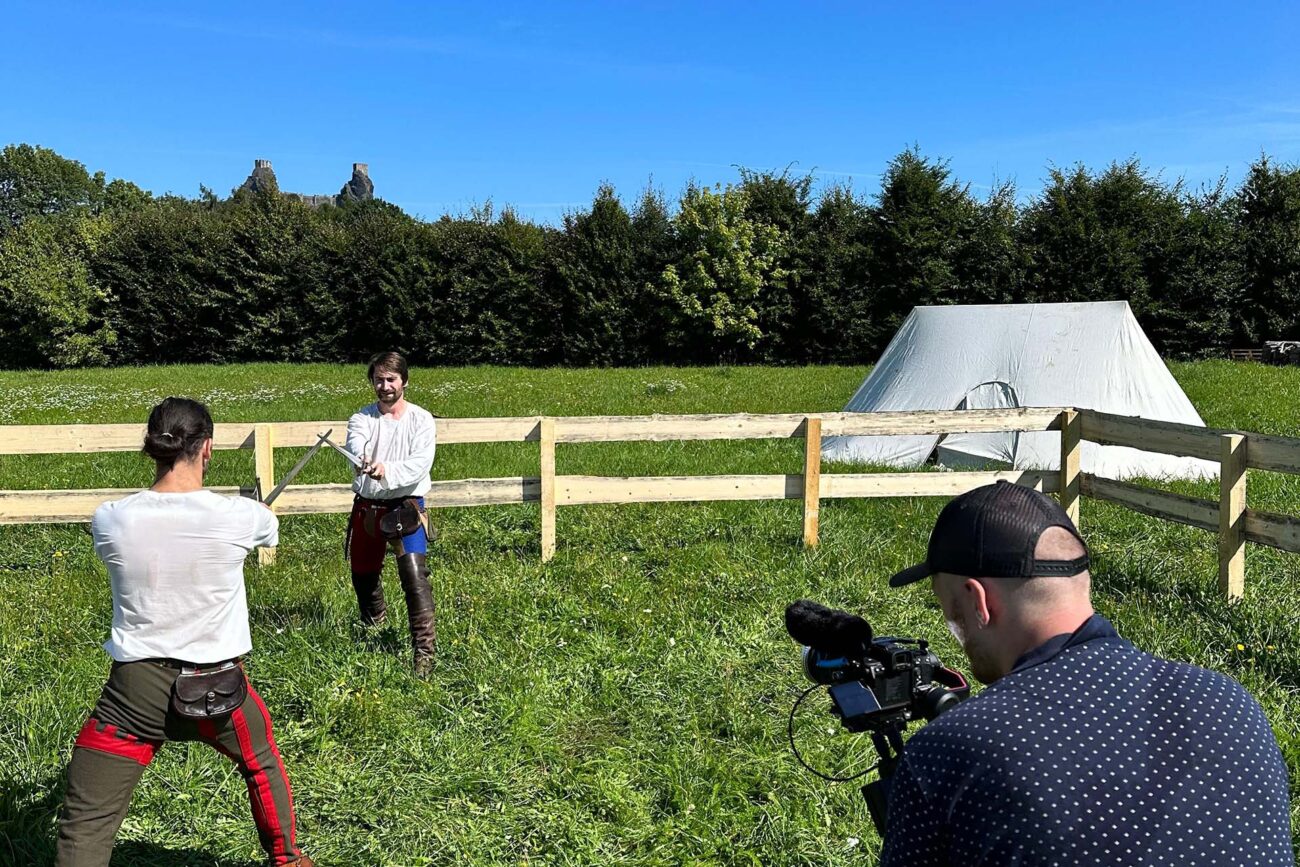
A budget you can see We are not an ultra-cheap production. But there is a difference between having two well-paid people on set versus fifteen to twenty. A larger crew travels in more cars and needs parking, catering, and hotels. All this makes the project more expensive and can decide whether the client will even go ahead with the project. As a producer of our authorial films, I am glad when the budget flows onto the screen: into better locations, actors, and costumes—in other words, where the viewer can see it. In the Czech Republic, we don’t have as strict unions as in America, so one person can hold multiple positions. Not because they have to, but because they want to. For the second episode of the Live Action Series, three of us—myself and two assistants—built an arena for a sword fight overlooking a castle ruin. We rented a van, brought everything in, cut it, screwed it together, and the result was beautiful.
Everything under one roof When we do things in-house, there is no waiting around. After editing, we immediately insert the music and adjust the sound. When the client realizes they want to re-edit or reshoot something, nothing has to be sent back to an external sound engineer for a new mix, and we don’t lose anyone due to illness. Weather and flexibility A documentary is not a commercial. When you order a sunscreen commercial for a specific day, the production has to shoot it even if it is cloudy and light it as if it were summer. Summer commercials are often shot in winter and vice versa, and that is where a large crew makes sense. But with a corporate film or a documentary, we can play with time. If the weather is not suitable, it is easier to reschedule a small, family-like production than to cancel twenty people and face cancellation fees. A documentary captures reality, so there is no need to modify reality as much. And when we don’t use lighting, it doesn’t mean bad light. We know how to work with natural light and choose angles so the shot looks expensive. Definitely better than what you commonly see on social media from content creators or agencies who tell clients they don’t need anything better. I disagree with that. Travel and languages Transporting two or three people abroad is easier than fifteen, for whom you have to organize multiple flights and transfers. We manage directing and interviews in Czech, English, and closely related languages like Slovak and Polish. Two examples from practice Farmet We have been collaborating with Farmet a.s., a family-owned agricultural machinery manufacturer, for about seven years. We shot videos for two of their anniversaries, and for the second one, a set of educational videos for individual stations within the company.
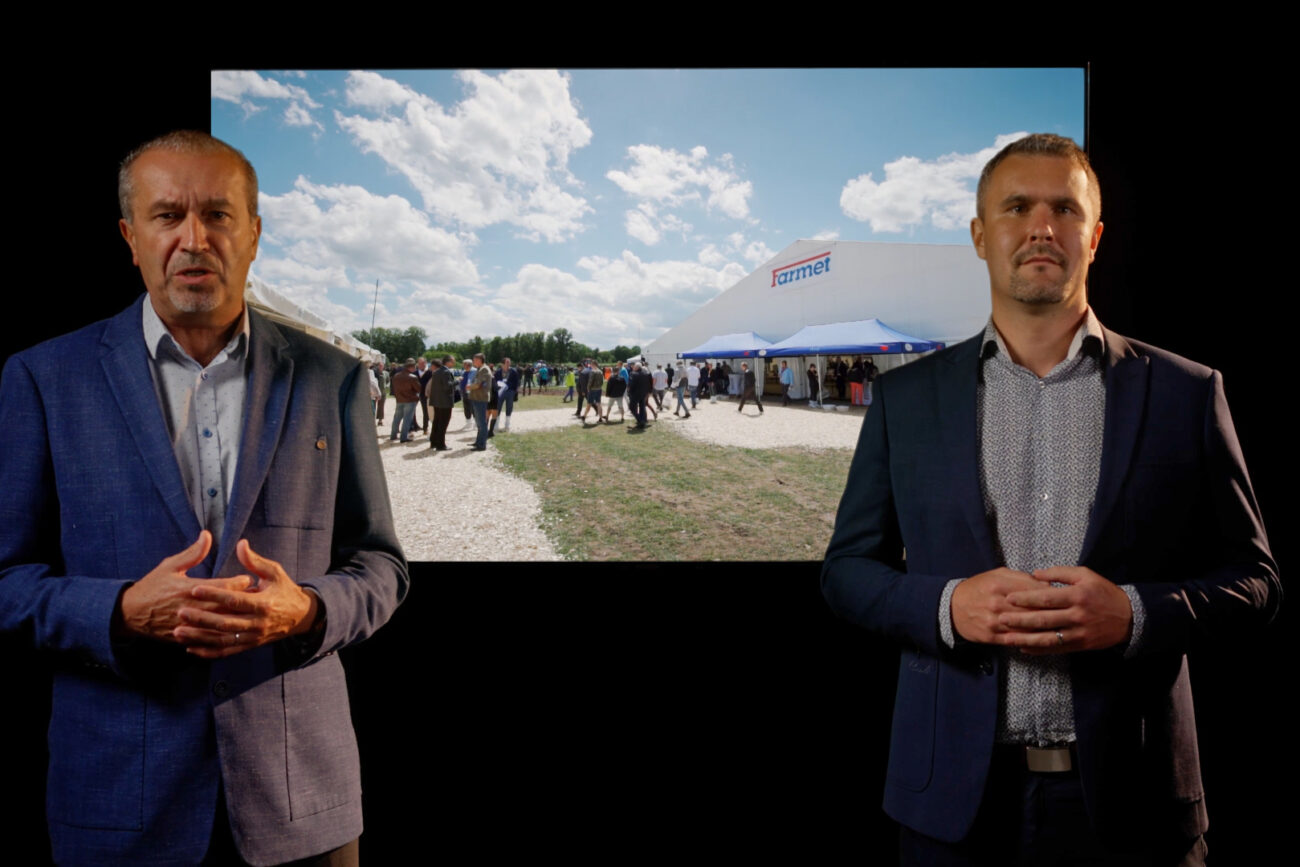
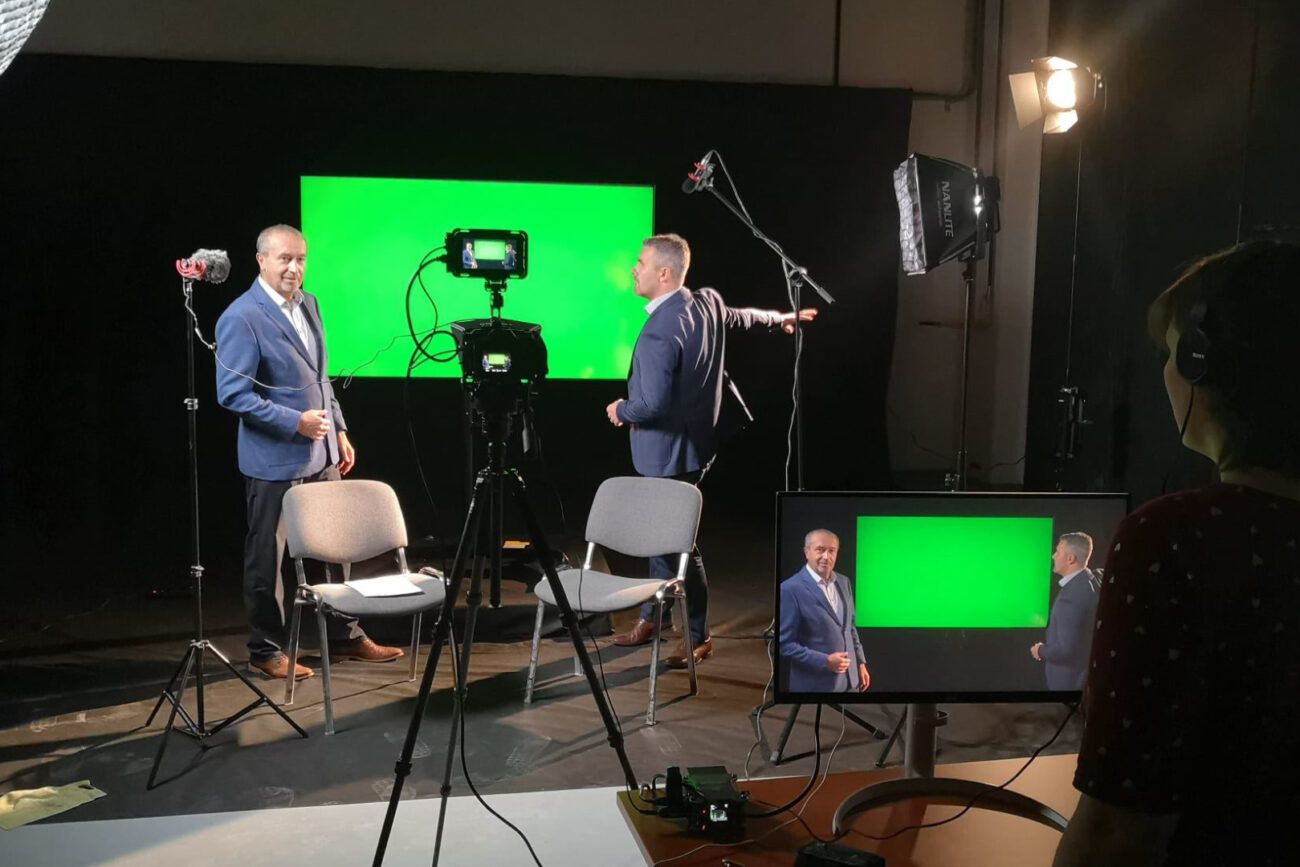
To make the videos look luxurious, we suggested an infinite background, either white or black. White would likely require renting a studio; black could be done directly in their empty hall. This hall was later intended to serve as a starting point for visitors: they play a film where the owners and directors welcome them, and then walk the route through the stations with TVs and educational videos with subtitles. On my recommendation, they chose the dark background. We lit the people and placed a TV with a green screen next to them, which we replaced in post-production with content relevant to the given topic. The respondents had a small teleprompter that they controlled themselves. The biggest challenge was the sound. The empty production hall full of sheet metal had a massive echo. Aside from physical solutions like carpets, I removed it using a special audio post-production plug-in. Back then, artificial intelligence was not yet common and it was quite an expensive tool, but it saved the client a lot of money. He was very satisfied, even though the echo bothered him during the shoot.
Krkonoše: Cesty Vlachů In the mountains, the rule is that the fewer cars you have, the more likely you are to get an entry and parking permit. With a small team and minimal equipment, it is easier to hike the mountains; you can get to places where a large group would damage the landscape, and no one waits for anyone. In my opinion, this does not mean a compromise in quality today.
A minimalist crew, full-fledged equipment Even though we know how to work in a minimalist crew, the equipment we own is sufficient even for large scripted series and films: lots of lights, microphones, cameras, a drone, stabilizers, sliders, tripods, and other grip gear. We select it custom for each shoot. Because it is ours, we know what condition it is in. We take care of it, we have backups for our backups, and we continuously invest in modernization. It never happens that rented equipment is worn out or damaged by a previous customer. And we can offer it to the client cheaper than a rental house, because the trip to a rental in Prague or Brno, the handover, testing, potential claims, and returns are eliminated. If the job gets postponed, you do not pay for equipment you didn’t use. The only disadvantage If I had to criticize a small crew for something, it is that some things can take longer. The director of a large film sits at the video village, perhaps even in a different location, with a large monitor and headphones, focusing solely on directing. When you are dealing with directing, production, the script, and unexpected situations all at once on set, decision-making can slow down. But for a documentary, I don’t think that plays a role. Why we do it this way This doesn’t mean I don’t like giving people work. Our production company simply tries to work efficiently. We ourselves are in the role of the client during our authorial projects, and that is why we want the shoot to feel not like work, but like a family of people who enjoy it and strive for the maximum result.